Introduction
The word Babeltee has started appearing across blogs, search results, trend articles, and online conversations, leaving many people with the same question: what exactly is Babeltee? Unlike a clearly defined company, celebrity, or product with one universally accepted identity, Babeltee sits in a more unusual category. It looks like a brand name, sounds like a modern internet term, and has been used in different contexts ranging from tea culture and lifestyle branding to digital communication, fashion, and creative online identity.
That ambiguity is precisely what makes Babeltee so interesting. In today’s online world, names do not always begin as fixed entities. Sometimes a word spreads because it is catchy, flexible, and easy to reshape. A term can start as a concept, become a niche brand idea, then evolve into a broader digital label used by different websites, creators, and communities. Babeltee seems to belong to that kind of internet phenomenon.
What Is Babeltee?
The most honest answer is that Babeltee is not limited to one single meaning. Instead, it appears to function as a modern, multi-use digital term that can be interpreted differently depending on context. In some articles and blog discussions, Babeltee is presented as a tea-inspired lifestyle concept or a fresh beverage trend. In others, it appears as the name of a fashion-forward brand idea, especially one focused on graphic T-shirts or expressive casual wear. Elsewhere, it is framed more abstractly as a creative digital identity tied to language, communication, culture, or online branding.
That kind of ambiguity would have been a problem in the past, but in the current internet landscape, it can actually be an advantage. A flexible name is easier to adapt across industries. It can feel new to every audience while still keeping a recognizable identity. That is one reason why Babeltee has started appearing in so many different kinds of content.
The Meaning Behind the Name
To understand why Babeltee works so well, it helps to break down the word itself. The first half, “Babel,” carries a strong cultural and symbolic charge. It immediately suggests language, communication, global diversity, translation, and the mixing of voices. For many people, it also recalls the biblical Tower of Babel, a story that has become shorthand for multilingual complexity and the challenge of understanding one another across cultural boundaries.
The second half, “tee,” is where the word becomes more playful and open. It can be read as tea, pointing toward beverages, comfort, ritual, and lifestyle. It can also suggest T-shirt culture, branding, and wearable identity. In a more tech-friendly interpretation, it feels like the kind of short ending often used in startup naming—soft, memorable, and flexible.
Babeltee as a Tea and Wellness Trend
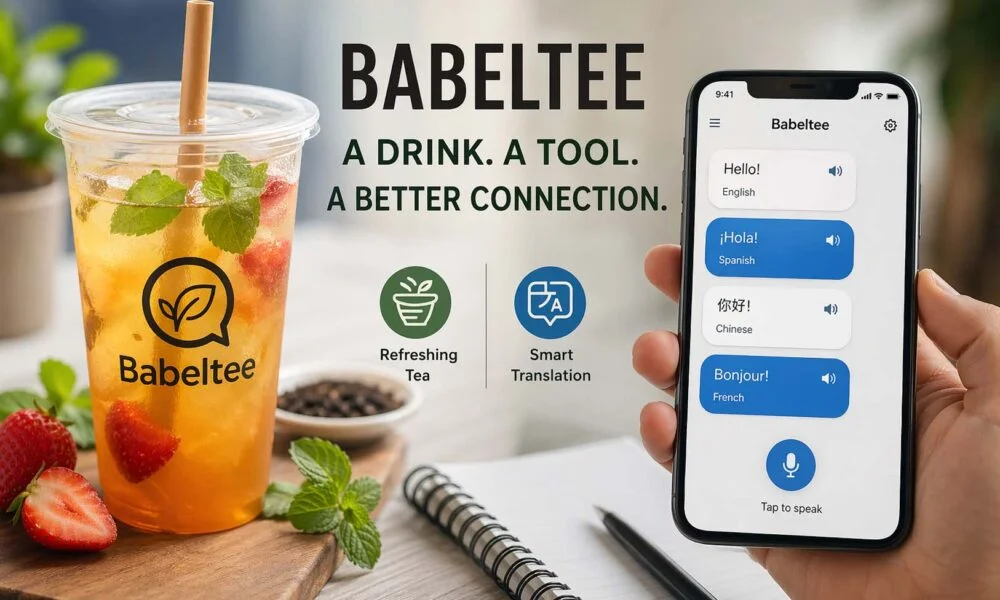
One of the most common ways Babeltee is described online is as a tea-based concept. In this interpretation, Babeltee refers to a modern beverage style that blends traditional tea with fruits, herbs, natural sweeteners, and wellness-focused ingredients. It is often framed as a lighter, healthier, and more customizable alternative to heavily sweetened drinks.
This tea-centered interpretation makes a lot of sense. Tea culture is already global, adaptable, and rich in symbolism. Different regions have their own traditions—Japanese tea ceremonies, Indian chai, Moroccan mint tea, British afternoon tea, Chinese loose-leaf traditions, and modern fruit-infused iced teas. A term like Babeltee fits neatly into that world because it suggests a meeting point of many tea cultures rather than one fixed recipe.
Babeltee as a Digital Lifestyle Brand
Another strong interpretation of Babeltee is as a digital-first lifestyle brand. In this version, the word works as a label for a business or creative identity focused on modern self-expression, especially through apparel, online design culture, or youth-oriented branding. This makes sense because the “tee” ending also sounds like T-shirt culture. If you imagine Babeltee as an apparel brand, the concept becomes surprisingly clear.
In a world where clothing brands increasingly rely on message, mood, and community rather than just fabric, Babeltee feels like a plausible label for a modern fashion concept. It suggests conversation, expression, and identity, all of which are central to contemporary lifestyle branding. What makes this interpretation especially strong is that it overlaps naturally with the tea-and-culture angle.
Babeltee and the Idea of Communication
The “Babel” part of the name also opens another possible reading: communication technology or multilingual interaction. Even if Babeltee is not an official mainstream app or platform, it has the kind of name that would suit one. It sounds like something built for translation, cross-border conversation, or creative collaboration across languages. That matters because digital naming is often about emotional suggestion rather than literal description.
This communication angle helps explain why the word keeps showing up in articles that describe it as more than a product. It is often treated as a concept of connection—a way of thinking about language, culture, and interaction in a more fluid and modern way. Whether used literally for a platform or metaphorically for a lifestyle idea, Babeltee carries that sense of bridging gaps between people.
Babeltee and the Rise of Concept Keywords
Babeltee also reflects a larger internet trend: the rise of what could be called concept keywords. These are words that are not yet fully stabilized as one thing, but gain momentum because they are catchy, adaptable, and useful as containers for multiple ideas. We see this pattern all the time in digital culture. A word begins as a blog topic, becomes a search phrase, then turns into a niche brand identity, a social media tag, or a broader aesthetic.
Babeltee fits that model perfectly. It is not famous because one company spent millions promoting it. It is interesting because it feels usable. Writers can use it for a lifestyle article. A startup could use it for a product. A fashion line could use it for branding. A café could use it for a signature drink. A culture blog could use it as a theme for global conversation. That versatility is not a weakness. It is the whole point.
Conclusion
Babeltee is one of those modern internet terms that becomes interesting precisely because it does not belong to a single, fixed category. It can be understood as a tea-inspired wellness concept, a digital lifestyle brand, a fashion identity, a communication-themed label, or a broader cultural keyword that blends language, creativity, and modern branding into one memorable word.
Its appeal comes from its structure and symbolism. “Babel” suggests diversity, language, and global connection. “Tee” softens the word and opens it to tea culture, fashion, and contemporary lifestyle branding. Together, they create a name that feels fresh, global, and highly adaptable. That adaptability is the reason Babeltee keeps appearing online. It works as a concept because it can move between industries without losing its identity. It sounds like a drink, a brand, a platform, and a trend all at once.
You May Also Read: Kelly Paniagua