Introduction
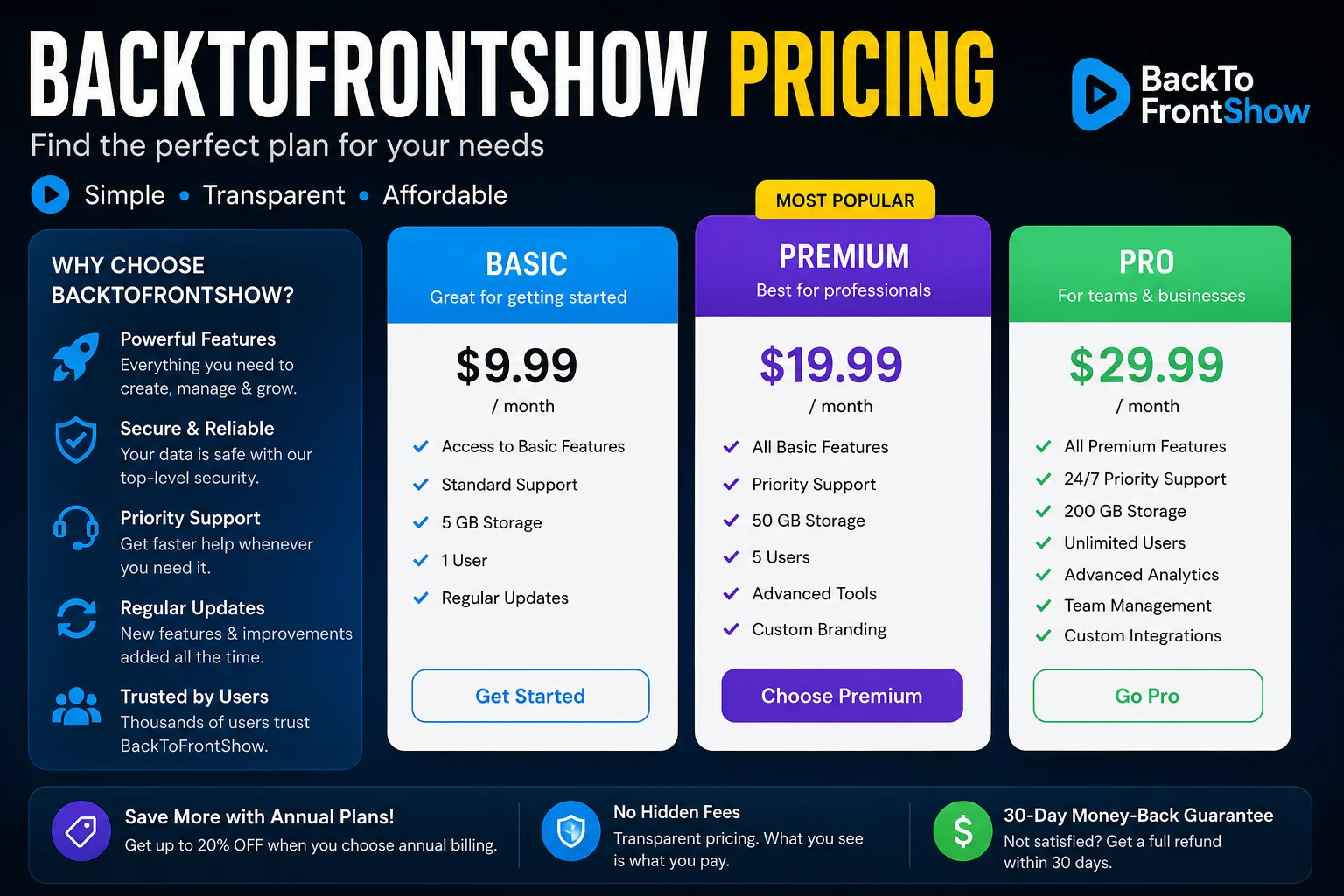
BackToFrontShow pricing has become a topic of interest for individuals and businesses searching for information about the platform, its available plans, and the overall value it offers. Before subscribing to any digital service, users naturally want to understand how pricing works, what features are included, and whether the investment aligns with their needs. Transparent pricing helps customers compare services, evaluate benefits, and make informed purchasing decisions.
Modern software platforms often provide multiple pricing options designed to accommodate different types of users. Whether someone is an individual creator, a small business owner, a growing organization, or a large enterprise, flexible pricing structures allow customers to choose a plan that matches both their budget and operational requirements.
Understanding Software Pricing
Software pricing has evolved significantly over the past decade. Many digital platforms no longer rely on one-time purchases. Instead, they use subscription-based models that provide continuous access to updates, customer support, security improvements, and new features. This approach allows users to spread costs over time while ensuring that the software remains current and compatible with changing technology.
BackToFrontShow Pricing influences purchasing decisions more than almost any other factor. Customers evaluate not only the total cost but also the overall value they receive. Affordable pricing may attract new users, but long-term satisfaction depends on feature quality, reliability, customer support, and ease of use. Businesses especially consider return on investment before adopting new software.
Common Pricing Models
Technology platforms typically use several standard BackToFrontShow Pricing structures. Monthly subscriptions provide flexibility and allow customers to cancel when necessary. Annual subscriptions often reduce the average monthly cost while encouraging long-term commitment. Freemium models offer basic functionality at no cost while reserving advanced features for paid plans.
Tiered pricing allows customers to select different levels of service based on usage requirements. Enterprise pricing usually includes customized solutions for larger organizations with unique operational needs. Understanding these models helps customers compare competing platforms more effectively.
Features That Influence Pricing
Software BackToFrontShow Pricing generally reflects the features included within each subscription level. Basic plans often provide essential functionality suitable for individual users or small projects. Higher-tier plans may include additional storage, advanced reporting, team collaboration tools, integrations, automation features, enhanced security, and priority customer support.
Enterprise solutions frequently offer dedicated account management, custom implementation, advanced analytics, and specialized technical assistance. Customers should evaluate whether premium features genuinely support their objectives before selecting higher-priced options. Technology providers increasingly recognize that pricing transparency contributes to stronger customer relationships.
Scalability for Growing Organizations
One advantage of tiered pricing is scalability. Businesses rarely remain the same size indefinitely. As organizations expand, their technology requirements also evolve. Scalable pricing allows companies to begin with entry-level plans before upgrading as employee numbers, customers, or operational complexity increase. This flexibility reduces unnecessary expenses during early growth while ensuring future capacity remains available. Technology that grows alongside a business often provides better long-term value.
Clear pricing information builds customer trust. Users appreciate platforms that explain subscription costs, included features, renewal terms, and cancellation policies in straightforward language. Unexpected fees or unclear billing practices may discourage potential customers. BackToFrontShow Pricing Transparent communication allows businesses to budget accurately while reducing misunderstandings regarding ongoing expenses.
Comparing Value Instead of Cost
The lowest price does not always represent the best value. A slightly more expensive platform may include automation tools, stronger security, improved performance, or responsive customer support that saves significant time. Evaluating value requires considering both financial investment and operational benefits. Questions worth asking include whether the software improves productivity, reduces manual work, enhances collaboration, or supports future growth.
Long-term value often outweighs initial subscription costs. Businesses handling sensitive customer information often require these additional protections. Investing in stronger security may reduce potential risks associated with cyber threats or unauthorized access. Security should never be overlooked when evaluating software BackToFrontShow Pricing.
Customer Support and Pricing
Support services frequently influence software pricing. Entry-level subscriptions may provide email assistance during business hours. Premium plans often include live chat, priority response times, onboarding assistance, and dedicated account managers. Reliable support becomes increasingly important when businesses depend heavily on software for daily operations.
Prompt technical assistance minimizes downtime while improving customer satisfaction. BackToFrontShow Pricing Organizations should consider support quality alongside feature comparisons. Modern digital platforms must prioritize security. Higher-priced subscriptions sometimes include advanced security capabilities such as multi-factor authentication, role-based permissions, encryption, detailed audit logs, and compliance reporting.
Collaboration Tools
Many software platforms support teamwork through collaborative features. BackToFrontShow Pricing Shared workspaces, project management tools, communication systems, document collaboration, and user permissions improve organizational efficiency. Smaller plans may limit the number of users, while premium subscriptions typically expand collaboration capabilities.
Businesses should estimate future team growth when selecting pricing plans. Scalable collaboration prevents operational limitations as organizations expand. Removing unused services helps control operational expenses while maximizing technology investments. Effective budgeting supports sustainable digital growth.
Integration Capabilities
Modern businesses frequently use multiple software applications simultaneously. BackToFrontShow Pricing Integration features allow different systems to exchange information automatically. Connecting customer relationship management platforms, accounting software, email marketing systems, cloud storage, and productivity applications reduces manual data entry.
Many software providers offer free trials before requiring payment. Trial periods allow customers to evaluate usability, features, performance, and compatibility without immediate financial commitment. Testing software under real working conditions provides valuable insights that marketing materials alone cannot offer. Businesses benefit from involving employees during trial periods to gather practical feedback before purchasing subscriptions.
Future Pricing Considerations
Technology platforms continually evolve. New features, expanded infrastructure, artificial intelligence capabilities, and enhanced security may influence future pricing adjustments. Customers should remain informed about upcoming updates, subscription changes, and newly introduced service levels. Choosing flexible providers capable of adapting to changing customer needs often represents a wise long-term investment.
Ongoing innovation frequently increases overall platform value. Hands-on experience supports more confident decision-making. Organizations should include software subscriptions within long-term financial planning. Monthly costs may appear manageable individually, but multiple subscriptions can accumulate over time. BackToFrontShow Pricing Businesses should periodically review active software licenses to ensure every subscription continues providing value.
Evaluating Return on Investment
Return on investment extends beyond direct financial calculations. Time savings, improved communication, higher productivity, reduced errors, enhanced customer experiences, and stronger collaboration all contribute to software value. Organizations should compare measurable improvements against subscription expenses. Even moderately priced software may deliver substantial operational benefits if it streamlines essential business processes.
Regular performance evaluation ensures continued value from technology investments. By carefully evaluating needs, comparing available options, and considering long-term objectives, users can choose a BackToFrontShow Pricing plan that supports both immediate requirements and future success.
Choosing the Right Pricing Plan
Selecting the appropriate subscription requires careful analysis. Individual users often prioritize affordability and essential features. Growing businesses may require expanded storage, collaboration tools, and customer support. Larger enterprises frequently prioritize scalability, advanced security, compliance capabilities, and dedicated account management.
Understanding organizational priorities helps customers avoid both underinvesting and overpaying. The best pricing plan balances functionality, flexibility, and budget while supporting future growth. As digital technology continues advancing, transparent BackToFrontShow Pricing, continuous innovation, and customer-focused service will remain essential factors influencing software selection.
Conclusion
BackToFrontShow pricing represents more than a simple subscription cost—it reflects the broader relationship between technology investment and business value. Whether evaluating entry-level plans or advanced enterprise solutions, customers benefit from understanding how pricing structures relate to available features, scalability, security, customer support, and long-term usability.
Modern software platforms increasingly offer flexible pricing designed to accommodate diverse users, from individuals to large organizations. Rather than focusing exclusively on monthly fees, businesses should consider overall value, productivity improvements, and future growth potential when making purchasing decisions.
You May Also Read: OneWorldPlate Daniel Croteau