Introduction
The name Morgan Macgregor often appears in entertainment searches because of her marriage to actor Michael C. Hall, the Emmy-nominated star of Dexter and Six Feet Under. Yet reducing Morgan Macgregor to the role of “celebrity spouse” misses the more interesting story. She has built her public identity around literature rather than Hollywood, and the most consistent descriptions of her work present her as a writer, book critic, and editor with a serious interest in contemporary fiction, literary culture, and publishing.
Macgregor’s story is compelling because it sits at the intersection of literature, privacy, and modern celebrity culture. She is one of those figures who becomes publicly visible almost by accident: not because she appears to seek fame, but because her work and personal life overlap with a famous partner. Instead of turning that attention into a constant media presence, she seems to have kept the focus on writing, reading, and a quieter intellectual identity.
Who Is Morgan Macgregor?
Morgan Macgregor is widely described in public profiles as a Canadian writer, book critic, and former editor who later became known to broader audiences through her relationship with Michael C. Hall. Entertainment and celebrity profiles consistently identify her as someone with a deep literary background rather than a conventional entertainment-industry career. She has been linked to editorial and criticism work, including associations with the Los Angeles Review of Books, and has also been described as someone working on fiction of her own.
That distinction matters because it shapes the way she is perceived. Morgan Macgregor is not famous for acting, music, or television appearances. Her professional identity is rooted in reading, reviewing, and writing. In a celebrity culture that often prioritizes visual visibility and social-media performance, a literary figure naturally stands out. The image that emerges from public reporting is of someone more comfortable with books than cameras, and more interested in ideas than exposure.
A Literary Identity Rather Than a Hollywood One
One of the most interesting things about Morgan Macgregor is that her public image is built around literature rather than film or television. Several entertainment and profile pieces describe her as a book reviewer and critic, and Michael C. Hall himself has spoken publicly about her expertise with books, saying that he benefits from her literary instincts and recommendations. In a Guardian interview referenced by later profiles, Hall noted that she has a remarkable ability to place books in the hands of the right readers.
That detail may sound small, but it says a lot about how Macgregor is perceived. She is not simply “someone who likes books.” She is described as a person with developed literary judgment—someone who reads seriously, thinks critically, and can engage with literature at a level that shapes others’ reading lives. That kind of role is important in publishing culture. Critics, editors, and reviewers do more than summarize books; they help create conversations around them, influence what gets noticed, and contribute to how literary communities define quality and relevance.
Her Reported Dream of Opening a Bookstore
One of the more memorable details that appears in profiles of Morgan Macgregor is her reported interest in opening a bookstore, sometimes described under the name “Dead or Alive.” This detail has circulated for years in articles about her and adds an especially vivid dimension to her public image. Whether or not that dream becomes a reality, it fits the larger portrait of her as someone deeply invested in literary culture rather than celebrity culture.
Bookstores occupy a special place in the public imagination. They are not just retail spaces; they are cultural environments, community hubs, and symbols of intellectual life. For someone who works with criticism and fiction, the idea of wanting to create a bookstore feels almost like an extension of identity rather than a business plan alone. It also reinforces the sense that Morgan Macgregor’s interests are tactile, curatorial, and rooted in reading communities
Relationship With Michael C. Hall
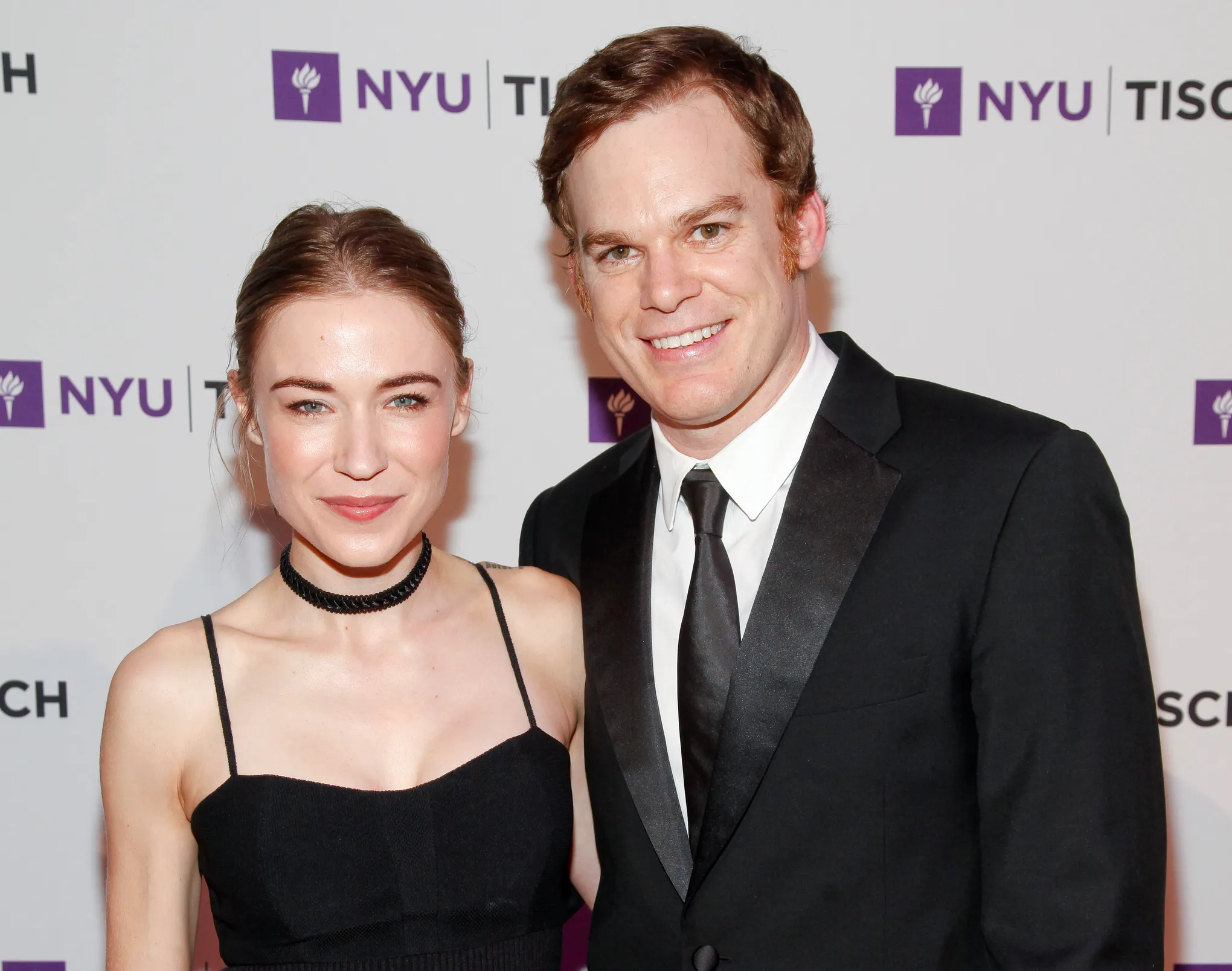
For many people, the first time they heard Morgan Macgregor’s name was in connection with Michael C. Hall. Hall, of course, is best known for playing Dexter Morgan in Dexter and David Fisher in Six Feet Under, two of the defining television roles of the 2000s and early 2010s. Public records and multiple entertainment profiles state that Hall and Macgregor began dating around 2012, made an early public appearance together at the Primetime Emmy Awards, and later married on February 29, 2016, in a low-key New York City Hall ceremony.
That timeline matters because it places their relationship in a mature stage of Hall’s life and career. By the time he met Macgregor, he was already an established television star with a long and very public professional history. He had also already gone through previous high-profile relationships, including marriages to actress Amy Spanger and Dexter co-star Jennifer Carpenter.
A Marriage Defined by Privacy
The relationship between Morgan Macgregor and Michael C. Hall stands out partly because of how deliberately private it appears to be. In celebrity culture, couples are often expected to perform their relationship publicly through interviews, social media, red carpets, and carefully staged glimpses into domestic life. Hall and Macgregor do not seem especially interested in doing that.
Yes, they have attended public events together, and their marriage is no secret. But the overall tone of reporting around them is consistently the same: they keep their lives to themselves. That choice aligns naturally with Macgregor’s literary identity. Writers and critics are not usually required to build themselves into lifestyle brands, and she seems to have carried that reserve into her public-facing relationship.
Morgan Macgregor Beyond the Label of “Celebrity Wife”
It is easy for public discourse to flatten women connected to famous men into supporting characters in someone else’s story. Morgan Macgregor is a good example of why that approach is too simplistic. Yes, her marriage to Michael C. Hall increased public awareness of her. But the more interesting question is not “Who is Michael C. Hall’s wife?” It is “What kind of creative and intellectual life has Morgan Macgregor built on her own terms?”
The answer, based on available reporting, is that she has built a life around books. She is associated with criticism, editing, literary ambition, and serious reading. She is not primarily framed as a Hollywood social figure, nor as someone seeking visibility through her husband’s fame. Even when celebrity outlets cover her, they tend to return to the same defining facts: Canadian background, literary work, editorial experience, fiction ambitions, and a private temperament.
Why Public Interest in Morgan Macgregor Continues
There are several reasons people continue searching for Morgan Macgregor. The most obvious is Michael C. Hall’s enduring popularity. Dexter remains a culturally significant series, and Hall’s continued involvement in the franchise keeps him in the public eye. Whenever audiences reconnect with Hall, they often become curious about his personal life, which naturally leads to Macgregor.
But there is another reason too: she represents a different kind of public figure. She is adjacent to celebrity without fully participating in its usual performance. She is associated with culture, writing, and criticism rather than entertainment gossip. And because she shares so little publicly, she becomes even more interesting. There is also a broader appeal in stories about people who live intellectually oriented lives within celebrity ecosystems.
The Appeal of Her Low-Key Public Persona
Morgan Macgregor’s low-key image is a major part of her appeal. She does not appear to be trying to convert literary credibility into mainstream celebrity. She is not constantly giving interviews about her marriage, launching public personal brands, or treating private life as content. That restraint is increasingly unusual. It also makes her seem more coherent as a public figure.
Everything about the available portrait of Macgregor points in the same direction: books, criticism, editing, fiction, privacy, and selective visibility. There is no obvious contradiction between her profession and her public behavior. In fact, the reserve almost strengthens the literary persona. She comes across as someone who values thoughtfulness and discretion more than exposure.
Conclusion
Morgan Macgregor is best understood not just as Michael C. Hall’s wife, but as a literary figure whose life has been shaped by books, criticism, editorial work, and a strong preference for privacy. Public reporting consistently presents her as a Canadian writer, critic, and former editor with a serious engagement in literary culture, including aspirations toward fiction and even the dream of one day opening a bookstore.
Her marriage to Hall brought her name into a wider public conversation, especially after the couple began appearing together publicly and later married in 2016. Yet what keeps people interested in Morgan Macgregor is not only that relationship. It is the contrast she represents: a book-centered, intellectually inclined, private creative person standing next to one of television’s most recognizable actors without seeming absorbed by the machinery of fame.
You May Also Read: Harlow Andrus